Educated Climber.com

  • Start Here
  • Content
    • Tree Climbing Basics
    • Tree Work Basics
    • Professor Ed Gilman Teaching Series
    • Knots
    • Rigging Basics
    • Chainsaw Basics
    • Basic Jobsite Skills
    • Pests and Diseases
    • Tree ID
    • Small Business Resources
    • Additional Resources
  • Podcast
  • Blog
  • Shop
  • Subscribe

Travelin’ Man

December 23, 2017 By patrick@educatedclimber.com 6 Comments


What a year it was! Thank you so much to all of my friends and followers, I couldn’t do it without you!

I recorded this song with my friend Scott, way back in 2007. I dusted it off for this project, and it ended up being the perfect tune. It’s unreal how much footage you get from an entire season of tree work. Filming adds a whole new dimension to the job, I love it! Let me know what you think, your comments and kind words are what keep me going. I appreciate you all so much!

Happy holidays friends!

– Patrick (TreeMuggs)


Filed Under: Back To Basics

This Is What I Did With My Copy Of ‘The Fundamentals’

December 23, 2017 By patrick@educatedclimber.com 3 Comments


When I heard that The Fundamentals was out of print a while back, I was heartbroken. This is the book that started it all for me. I contacted Jerry B. back in April or May of this year, with the intention of bringing it back. I wanted to release it as both a paper copy and an e-book. I just couldn’t imagine his life’s work fading away, unavailable to the younger generations.

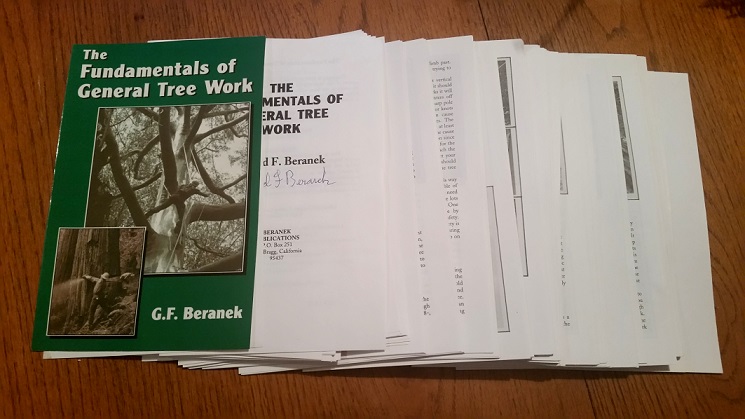
Jerry donated a couple copies to me (mine is all full of notes, underlines, asterisks, exclamation marks…you get the picture). I needed a fresh copy for this project, plus I figured I should have a backup, just in case. I asked him to sign the one that would be scanned, so that every new copy going forward would be signed by the author (he ended up signing both copies, the signed “backup” is now my prized possession!)

I brought the copy to the print shop that I have used for the last 7 years for all of my business printing. They are a good print shop, with 10 locations across the province, so they had all the equipment at their disposal. I had them slice the spine off the book, then they scanned each page, front and back, by hand (the book is over 500 pages long!). The final product was a 112 MB, PDF file of the book.

Next we started making proofs, trying to see how it would look in print. The results were lackluster. After much back and forth with the print shop, I didn’t know what to do. They had made it very clear from the get-go that this was an experiment on their part, they had never tried to re-create an out-of-print book by scanning before (it was obviously an experiment on my part as well, I’m just a tree climber.) I chose about 10 pages, with and without images, for them to re-scan, using different settings. No luck. After trying 3 different ways of scanning the book, we were unable to get a satisfactory quality. There was always a problem either with the text or the pictures, but never with both at the same time. It tended to look good in the scans but then when it went to print it either looked grainy or blurry or washed out. I was disappointed to say the least.

At that point, I turned my attention to the e-book idea. I figured it was a hell of a lot better than nothing. I prefer physical books myself, but the younger kids would be thrilled with a digital copy! So now I was faced with the 112 MB dilemma. It was way too big to be a digital download. I figured it should be less than 30 MB to distribute. I also knew it would have to be searchable if we were going to sell it. This is where the project stalled for a few months. I had no idea how to get the file size down. I’m a nerd, and I tried all kinds of things. But it wasn’t working.

Then in October, the breakthrough happened. I found out about this type of text processing in Adobe Acrobat called ‘Clearscan’. I processed the book with Clearscan, and bam! It went from 112MB to 30MB, all without negatively affecting the actual images! Then I processed it with Optical Character Recognition software, to make it fully searchable. Now everything contained in 500+ pages is easy to find, you can just press CTRL-F and it instantly shows you where it is. Next I played around with file optimization, and eventually got it down to 23 MB. I knew I was onto something!

I messaged Jerry with the good news, and started working on a sales page. 6000 words later, the sales page was done. I want to completely overwhelm people with just how much content is in this book. Whether it costs $20 or $50 or $100, it really is a steal. The knowledge and wisdom in this book is a bargain, at any price. Seriously, if you actually read all the way to the bottom of that sales page, there is no way you aren’t going to buy Jerry’s book!

So now I had the file, but I had no idea about digital payment processing or fulfillment. This took a few more weeks. I eventually figured it out. The checkout process is seamless, and the book is delivered as a digital download via email after payment is completed. Jerry said we should sell it for $20, so that’s what I did. It’s a compromise for sure on the original plan of a physical book, but I couldn’t be happier with the final outcome, I’m very proud of it.

So, to make a long story short, the Digital Edition came on-line this past Wednesday, and the first person in the world to purchase a copy was my own apprentice James! Our plans for a physical copy of the book are on hold, for now. But in the meantime, The Fundamentals is back!

I want to thank Jerry Beranek for all the support throughout this process, and for pouring his heart into The Fundamentals all those years ago. You were my inspiration from day one! I have been of the opinion for a very long time now, that every new, up and coming arborist should read ‘The Fundamentals’. This project ensures that Jerry’s book will remain available for many, many years to come!

The book has been live for a month now and it has sold over 150 copies! We couldn’t be happier. You can check out ‘The Fundamentals of General Tree Work – Digital Edition’ exclusively on EducatedClimber. All the best!


Get your copy of ‘The Fundamentals’ here:
https://www.educatedclimber.com/beranek-fundamentals/


Climb high, Work smart, Read more.

– TreeMuggs


Filed Under: Blog

Winter is Coming…

November 10, 2017 By patrick@educatedclimber.com 6 Comments

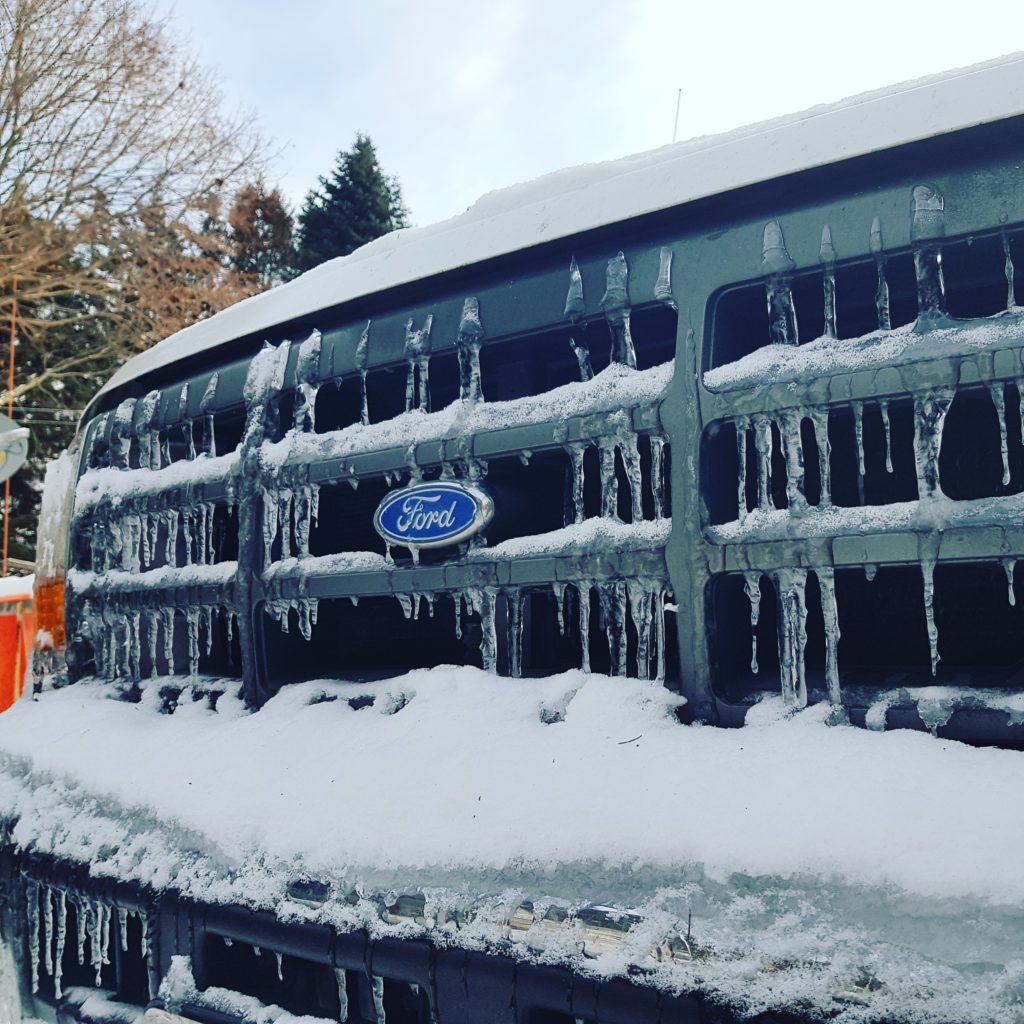
In light of the first snowfall here in London, Ontario, I wanted to look at some basic considerations for working in the winter. James had an eye opener climbing in snowy conditions today for the first time! Here are some things to think about for winter tree climbing:

1. Ropes
When you use ropes in the snow, they get covered in it, then they get warmed up from usage, which soaks the water into them, and then they freeze overnight. Then the next morning, they are… literally… useless. Don’t be the guy who tries to use a frozen rope – for anything. You need to get religious about drying out the ropes that you use on a daily basis: take them home, unpack them in the house, get them dry. For me, this means beside the wood stove. Regardless of how you accomplish this, it has to become a priority. Figure out a way to dry your ropes each night, and do it every time. This also means that I end up limiting the number of ropes that I use – one climbing rope, one main rigging rope, one tag line, and that’s about it. The more ropes you use each day, the more ropes you have to dry each night…

2. Hands
I don’t know about you, but when my hands get really cold, they are utterly useless. Imagine trying to do tree work with two frozen stubs where your hands used to be… yeah you get the picture. I don’t climb with gloves during the summer, but in the winter I can’t climb without them. Get some good insulated grippy gloves, and bring minimum 2 pairs to work each day. They have to be dry to be useful. Keep your backup pair(s) in the truck on the dashboard heater where they can get dry on the way to the next job. If you are working with a bucket truck, turn the heater on low while you are working and keep your backup gloves on the vents.

3. Head
If my head and ears get real cold, I’m pretty much done. Get a helmet liner, and get back to work.

4. Upper body
Get some good, insulated, long-sleeve base-layer shirts that are made for work. These can make all the difference on those cold days. These go underneath your regular work shirts. I also like a good quality work sweater with hood, the kind that doesn’t have a zipper. This will hold in a lot of warmth. Also consider a wind-proof outer jacket, this can be a game changer for working in the cold.

5. Lower body
Chainsaw pants are notoriously warm, it’s like we wear snow-pants all summer long! But when the cold weather comes back around, it might be time to re-evaluate your chainsaw pants. Grab a new pair that is free of holes, and all the wear and tear from the summer work. Your legs will thank you.

6. Socks
Get some good, thick, wool socks for the winter. Some people go with just wool, some put woolies on top of their regular socks. Bring a backup pair of socks to work each day, just in case. Cold and wet feet can wreck your day so fast… trust me on this.

7. Boots
I have made it a habit for the last 10 years to get a new pair of work boots as we get into the winter season. Snowy trees are slippery, and snowy ground is wet. Good quality, leather work boots are a necessity in the snow, don’t skimp on your boots!


So, what about you? What are your recommendations for working in the cold? Reply and let me know, I will add it to this article!


Climb high, Work smart, Read more.
– Treemuggs (Patrick)


Filed Under: Blog

Our Role as Arborists

October 7, 2017 By patrick@educatedclimber.com 2 Comments

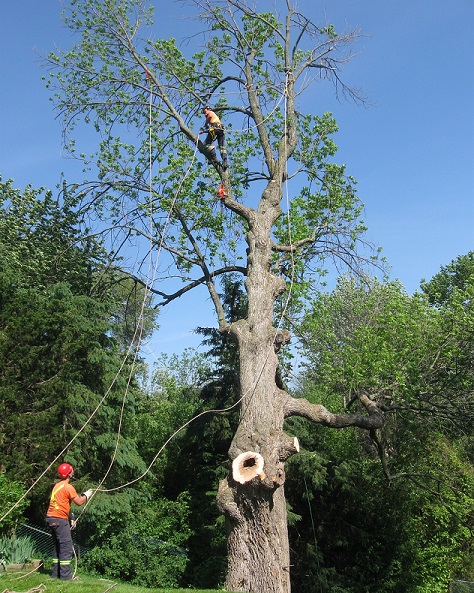
– image courtesy of pacifichorticulture.org


“An arborist’s career is centered around maintaining the health and beauty of trees.”

In my opinion, our role as arborists is to be committed to all aspects of tree conservation, preservation, and environmental stewardship.

I believe that the benefits of trees to the urban landscape are unmistakable, yet trees take so long to grow that they cannot simply be replaced if damaged or removed. I believe that any “tree service” can cut trees down, but it takes a true professional to provide for the long-term health and well being of our cherished landscape trees. Our role as “Green Industry” professionals is to help educate homeowners on how best to preserve and protect the natural heritage of our modern urban ecosystem.

Since finishing my own apprenticeship, my business has been built around helping my customers make more informed decisions about their trees and landscape. Nowhere is this more evident than in my own commitment to helping customers visualize solutions to tree issues and being able to provide workable compromises to tree removal. Yes, sometimes trees will be need to be removed, but in my experience, pruning and other measures can often be used systematically to save trees from removal. In this way, we both, accomplish the goals of those involved, while also acting as good stewards of the urban environment, our natural heritage.

Look, let’s be honest. I do a lot of removals. That is just part of the trade. There is a very real concept of ‘wrong tree, wrong place’. I get it. All I’m saying, is that our primary focus as professional arborists, ought to be on trimming and preservation, rather than on removals. There are untold numbers of ‘tree guys’ out there, who go around cutting trees down for cutthroat prices, with no consideration for the future of the neighborhoods that they operate in. But the reality is this: trees take an incredibly long time to grow. You can lose your entire lawn, call a sod guy, and within a few hours, you can have a brand new lawn. It just doesn’t work that way with trees. Trees are a long-term investment. Trees are the elder statesmen of the urban landscape. They are unlike all man-made structures, and different than all of the other aspects of landscape design. Trees are unique, and they deserve our utmost respect and admiration. I love trees, but I’m not a tree-hugger. If you can understand that contradiction, then you can start to understand how I see our unique role in the community at large, both as professional arborists, and as business and thought leaders.

So, there it is. Thoughts? Opinions? Let’s continue the conversation….


Climb high, Work smart, Read more.
– TreeMuggs


Filed Under: Back To Basics

Tree Gear: A Capital Investment

September 23, 2017 By patrick@educatedclimber.com 9 Comments

I was talking to my friend Ben this morning about lanyard setups and the costs involved in moving from simplistic, old-school setups, to more modern setups, involving micropulleys, biners, hitch cords, etc. I was sensing some hesitation on his part, mostly due to the cost of getting all of this extra kit. It brought to mind an idea that has come up so many times over the years regarding the price of gear – you need to remember that gear makes you money! Spending money on this stuff is not the same as spending it on video game systems, or a night at the bar with your buddies. It took me a long time to realize that difference, but once I did, it was a game changer.

Good gear is capital. Now I know that people use the word ‘capital’ these days interchangeably with the word ‘money’. But capital is not money. OK, here’s a super-mega nerd revelation – I collect old dictionaries. Now I know what you’re thinking – you can just look up the definitions of words on Google right? Yes, you can. You can learn the current definition of words on Google. But many definitions have changed over the years, and ‘capital’ is one of them. The historical definition was “anything used in the production or distribution of goods and services.” And I would argue, by extension, that anything that is used in the production or distribution of goods and services, is not a cost, but rather an investment. If it speeds up production, or adds a layer of safety, or makes your life easier, then it is an investment, it is capital, and it is worth every penny. And if you end up using it over the long haul, it is not only worth every penny, it is actually incredibly cheap!

I remember doing my very first side job. I borrowed my buddy’s spurs to do it, and then I took every penny from that job and went and bought my own set of spurs. They cost me $500, which at the time seemed insane. But you know what? I still use that same old pair of spurs, and they are still kicking ass. So what seemed super expensive to me at the time, was actually cheap as shit – think about all of the money those spurs have made me over the last 9 and a half years! It’s insane! So that is how I view gear and kit. If it makes you money and it is durable and long-lasting, then it is actually very inexpensive! Seriously. Most of this stuff didn’t even exist a few years ago! Do you realize how fortunate we are to be able to buy a 5000 lb, triple-action biner for $20-$30? Or a 24 strand, 6000 lb rope for a couple hundred dollars? We are literally living in the future! This stuff is amazing, it’s being produced on a massive scale, and we are so, super lucky to be able to get it through any one of dozens of suppliers. Gratitude, my friends. Seriously!

This is not to suggest that you throw your hard earned cash at every shiny piece of kit you see. Money is tight, trust me, I know. You need to carefully evaluate each purchase beforehand. It’s only expensive if you buy one of everything, all willy-nilly, because you will end up with a bunch of stuff that you don’t even end up using. This is why it pays to hang out with other people in the trade. Make friends with climbers from other companies. Go to industry get-togethers. Check out the tree climbing competitions. Watch trusted sources on Youtube. Be informed on the new gear. Evaluate as many options as you can, before making the purchase. The marketplace around this trade has exploded over the past 15 years, and I know it can be thoroughly overwhelming. Learn as much as you can, don’t just go out and buy kit. But don’t make the mistake of thinking that this stuff is way overpriced. Because, quite simply, it isn’t.


Continue Reading: Gary Vaynerchuk’s 10 Rules of Success


Climb high, Work smart, Read more.
– TreeMuggs


Filed Under: Blog

  • « Previous Page
  • 1
  • …
  • 5
  • 6
  • 7
  • 8
  • 9
  • …
  • 13
  • Next Page »
  • The Manifesto
  • Subscribe to EducatedClimber
  • EducatedClimber on Youtube
  • Disclaimer
  • Amazon Affiliates Disclosure Page

Copyright © 2026 — Educated Climber.com • All rights reserved.